


Best Local Advertising Channels That Drive Leads

A roofing company can get thousands of local video views and still have an empty sales calendar. A dental practice can rank well in search and still lose patients to the office with stronger reviews and faster follow-up. The best local advertising channels are not simply the places where people spend time. They are the channels that put a clear offer in front of the right nearby audience, then make every call, form fill, visit, and sale measurable.
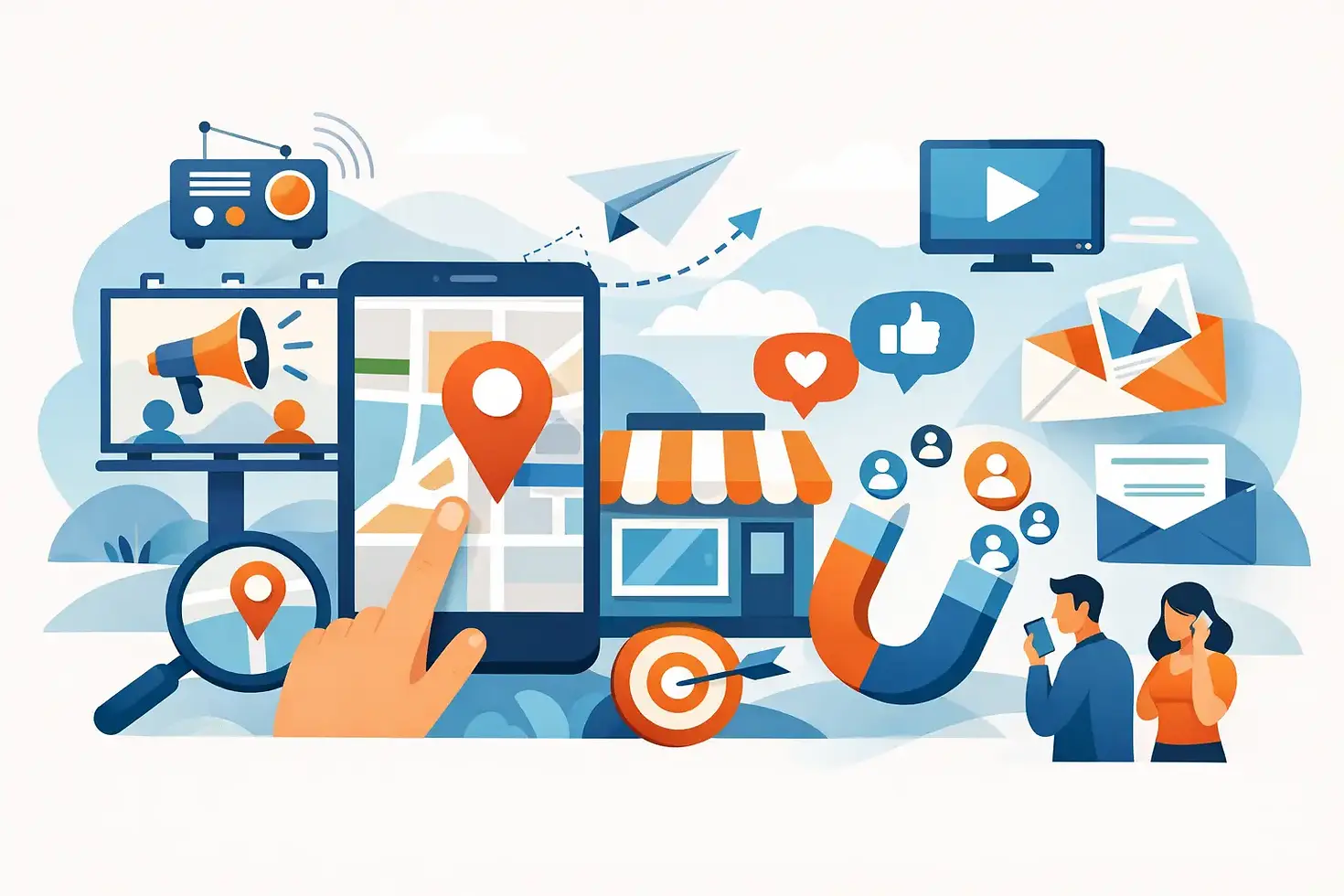
For most businesses, local advertising works best as a coordinated system. Search captures demand that already exists. Social and video create demand before a prospect starts researching. Maps, reviews, and landing pages turn interest into action. The right mix depends on how your customers buy, what a qualified lead is worth, and how quickly your team can respond.
Start With the Outcome, Not the Channel
Before allocating budget to Google, Meta, connected TV, direct mail, or anything else, define the conversion that matters. For a restaurant, it may be reservations, online orders, or a measurable lift in weekday traffic. For a dealership, it could be qualified test-drive appointments. For a contractor, it is usually booked estimates with enough project value to justify acquisition cost.
This sounds obvious, but it prevents a common mistake: optimizing for cheap clicks or high view counts while ignoring lead quality. A campaign that produces 100 inquiries from people outside your service area is not outperforming one that produces 20 serious prospects who answer the phone and can buy.
Set a practical measurement plan before launch. Use dedicated call tracking numbers, tracked forms, website visitor tracking, appointment data, CRM attribution, and campaign-specific landing pages where appropriate. If a channel cannot be connected to a meaningful action, it may still have branding value, but it should not be judged by the same standard as direct-response media.
The Best Local Advertising Channels for High Intent
Google Search and Local Services Ads
Google Search remains one of the strongest channels for businesses that solve urgent or clearly defined needs. Someone searching for emergency plumber near me, dentist accepting new patients, or commercial roofing contractor is signaling immediate intent. Your job is to appear with a relevant ad, a credible offer, and a fast path to call or request service.
Search is especially effective for professional services, healthcare, home services, automotive, and B2B companies with established demand. It can also become expensive in competitive markets. That is why keyword selection, geographic targeting, negative keywords, landing page quality, and call handling matter as much as the media budget.
Local Services Ads can be valuable for eligible service categories because they place businesses prominently for local service searches. They are not a replacement for a complete search strategy. Lead screening, review management, service coverage, and response speed all influence whether those leads become profitable jobs.
Google Maps, Business Profiles, and Review Momentum
Local search advertising cannot carry a weak local presence forever. When prospects compare options, they look at ratings, recent reviews, photos, hours, service areas, and how the business responds to feedback. Your Google Business Profile often acts as the final credibility check before a call.
Paid search can send traffic to your site, but Maps visibility and reviews can win the decision. Keep business information accurate, add current photography, publish useful updates when relevant, and create a consistent review-request process after successful customer interactions. Never treat reviews as a one-time cleanup project. They are an ongoing conversion asset.
Meta Ads for Local Awareness and Retargeting
Facebook and Instagram are effective when customers do not wake up actively searching for what you sell. A local salon can promote transformations and seasonal packages. A restaurant can showcase menu items, events, and limited-time offers. A dealership can put new inventory, financing offers, and walkaround videos in front of nearby buyers before they search.
Meta is often strongest when creative does the targeting work. A polished but generic brand video may earn views without producing action. A short video that shows the service, names the local problem, explains the offer, and gives viewers a reason to respond is far more useful.
Use local radius or ZIP-code targeting thoughtfully, then retarget people who watched substantial portions of your videos, engaged with your social profiles, or visited key pages. Retargeting works because the audience already recognizes you. Give them the next step: schedule, call, get a quote, claim an offer, or visit the location.
YouTube, TikTok, and Short-Form Video
Video gives local businesses something static ads cannot easily deliver: proof. A patient testimonial, technician walkthrough, chef interview, customer transformation, or behind-the-scenes process can reduce uncertainty before a prospect contacts you.
YouTube is useful for reaching people around specific interests, searches, and local audience segments. TikTok and Instagram Reels can build efficient reach when the content is native to the platform: quick, clear, visually active, and direct. The goal is not to chase every trend. The goal is to create high-impact content that makes a local customer stop, understand the value, and remember the business.
Short-form video is usually an awareness and consideration channel, not an isolated lead machine. Pair it with retargeting, a strong profile, and a landing page built for conversion. For businesses with longer buying cycles, such as construction, healthcare, or professional services, video can keep your company familiar until the buying moment arrives.
Connected TV and Local Broadcast
Connected TV lets businesses reach households through streaming environments while adding more targeting and reporting than traditional television alone. It can be a smart fit for automotive, healthcare systems, regional retailers, events, legal services, franchises, and companies that need broad local awareness at scale.
The trade-off is that CTV typically creates demand rather than harvesting it. Do not expect every viewer to scan a QR code and become a customer immediately. Instead, measure branded search growth, website traffic, retargeting audience size, direct traffic, lift in calls, and downstream conversions. A memorable commercial paired with search and social retargeting can outperform either channel operating alone.
Linear television still has a place when the audience and market justify it, particularly for regional campaigns, sports programming, and broad household reach. The creative needs to earn the spend. If the commercial looks interchangeable with every competitor, the media buy will not fix it.
Channels That Support the Conversion Path
Email, SMS, local sponsorships, direct mail, and community partnerships are not always the first choices in a paid media plan, but they can be highly profitable in the right situation. Email and text are especially powerful for reactivating previous customers, following up on estimates, promoting seasonal offers, and filling gaps in the calendar.
Direct mail can work for tightly defined geographic campaigns, such as new movers, high-value neighborhoods, or specific service zones. It works best when the offer is concrete and the follow-up is trackable through unique phone numbers, QR codes, landing pages, or promo codes. Local sponsorships can build trust, but they need a clear activation plan. A logo on a banner rarely creates measurable demand by itself.
Build a Local Media Mix That Can Learn
Do not spread a modest budget across eight channels and hope something sticks. Start with one high-intent channel and one demand-generation channel. For example, a local contractor may combine Google Search with Meta video retargeting. A restaurant may use short-form social ads for weekly offers plus Google Maps support. A regional healthcare provider may pair CTV reach with paid search and conversion-focused landing pages.
Give the campaign enough time and budget to generate usable data, then review the full path from impression to closed revenue. Look beyond platform dashboards. A platform may claim many conversions, while your call recordings reveal poor lead quality or missed opportunities. Conversely, a channel that appears expensive at first may be introducing high-value customers who convert later through branded search or direct visits.
Creative fatigue also matters. Local audiences see the same ads quickly, especially in smaller service areas. Rotate new hooks, testimonials, offers, visuals, and calls to action before performance declines. The best campaigns are not set-and-forget. They are actively managed systems that use real results to make the next round of media and creative sharper.
A local advertising plan earns its budget when it connects attention to action. Choose channels based on customer intent, produce creative people can understand in seconds, and track every meaningful response closely enough to know what is actually moving revenue. That is how local visibility becomes a dependable growth engine rather than another line item with vague results.


Comments