


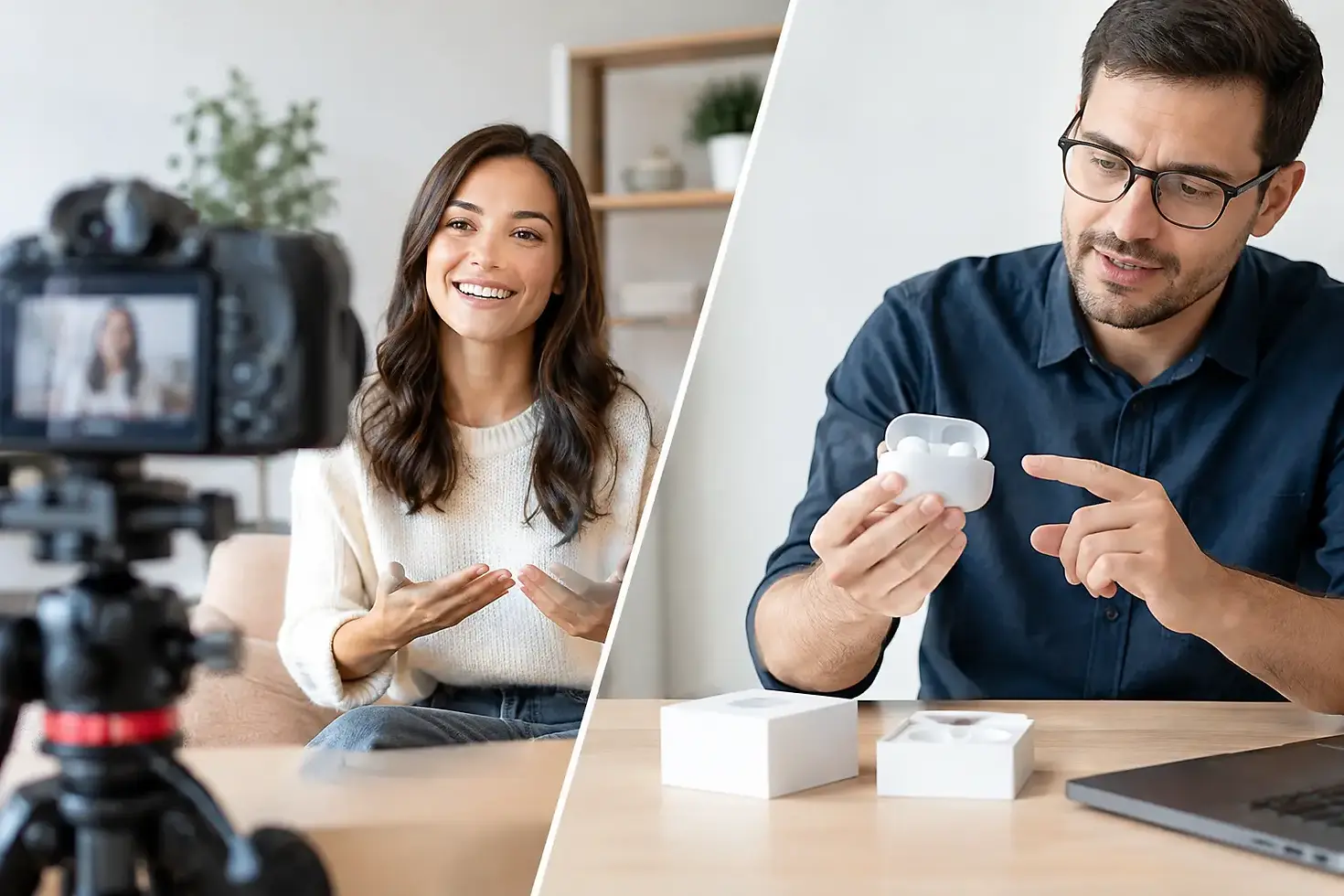
Brand Video Versus Product Demo: Which Converts?

A prospect lands on your site after seeing an ad, scrolls past a polished video, and still does not contact you. The problem is not necessarily the production quality. It may be that you used a brand video when that buyer needed a product demo - or asked a demo to do the relationship-building work of a brand story. In the brand video versus product demo decision, format matters because it shapes what the viewer understands, feels, and does next.
For businesses investing in paid media, social content, websites, or Connected TV, video should have a job. High-impact creative gets attention, but conversion comes from matching the message to the buyer's stage, objections, and next action.
Brand Video Versus Product Demo: The Core Difference
A brand video sells belief. It answers the larger question behind a purchase: Why should someone trust your business, care about your approach, or choose you over a familiar competitor? It is built around positioning, personality, customer outcomes, people, and proof. The product or service is part of the story, but it is not always the entire story.
A product demo sells understanding. It shows how something works, what the customer gets, and why the solution is practical. It can walk through software screens, show a roofing crew's process, demonstrate a dental technology, reveal a vehicle feature, or explain what happens after a customer submits a form. Its job is to reduce uncertainty.
Neither format is automatically better. A restaurant opening in a competitive market may need a brand video that makes people feel the atmosphere, food, and energy before asking for a reservation. A practice administrator comparing patient communication platforms needs a demo that proves implementation will not create more work for the team.
The distinction is simple: brand video builds preference; a demo removes friction. Strong campaigns often need both.
When a Brand Video Earns the Budget
Choose a brand video when the market needs to understand who you are before it can appreciate what you sell. This is especially true when your service is hard to compare on a feature checklist or when trust carries more weight than price.
A well-produced brand video can put a face to an organization, clarify its point of view, and make an otherwise interchangeable company more memorable. For a local construction firm, that might mean showing craftsmanship, project management, and the team members homeowners will actually work with. For a nonprofit or municipality, it may mean showing the human impact of a program rather than listing services over stock footage.
Brand video is also useful when you are expanding into a new market, recruiting employees, launching a repositioned identity, or running broad-awareness advertising. On YouTube, Meta, TikTok, Connected TV, and linear television, the first job is often earning enough interest to create future demand. A good brand spot gives people a reason to remember you when the need becomes immediate.
That said, broad does not mean vague. Too many brand videos deliver cinematic visuals and generic claims: great service, trusted team, quality you can count on. If every competitor could say it, it will not move the market. The story needs a specific point of difference, a credible proof point, and a clear next step.
When a Product Demo Does More Work
Use a product demo when prospects are already evaluating options or when confusion is slowing the sale. A demo is particularly effective for products with visible functionality, services with a clear process, and offers that solve a tangible problem.
For example, a dealership can produce quick videos showing towing technology, interior storage, safety features, or a comparison between trim levels. A salon group can demonstrate a treatment process and set realistic expectations about results and aftercare. A B2B company can show how its platform handles a workflow that currently costs the buyer time, money, or missed leads.
The best demos do not try to show everything. They focus on the moments that matter most to the buyer. If a prospect's biggest concern is speed, show speed. If it is ease of use, show the process with minimal explanation and no jargon. If it is quality control, show the standards, equipment, or steps that make the outcome more reliable.
A demo can be direct without feeling dry. Clear visuals, a confident voiceover, customer context, and concise on-screen text can turn a functional explanation into conversion-focused content. The viewer should finish with fewer questions and a stronger reason to request a quote, book an appointment, or start a conversation.
Match the Video to the Funnel, Not Your Preferences
Business owners often choose brand video because it feels like a bigger statement. Teams with technical products often lean toward demos because they are easier to explain. Both instincts can create a gap if they ignore where the audience is coming from.
At the top of the funnel, people may not know they need you yet. Brand video, customer stories, short-form lifestyle content, and problem-focused creative can introduce the category and make your company recognizable. The call to action may be light: learn more, follow, watch, or visit the site.
In the middle of the funnel, prospects are comparing approaches. This is where short demos, process videos, before-and-after footage, FAQs, and proof-driven case examples gain traction. They help audiences assess whether your solution fits their situation.
Near the decision point, the video should lower the final barrier. A focused demo, walkthrough, testimonial, pricing explainer, or appointment-prep video can make the action feel easy and low-risk. The call to action should be specific: schedule a consultation, request a quote, see inventory, or book online.
The distribution channel changes the calculation too. A 30-second vertical video on Instagram may introduce one sharp product benefit. A longer YouTube video can handle a detailed walkthrough. A landing-page demo can answer objections after an ad click. For paid campaigns, creative and media strategy should work together instead of treating production as a one-time branding expense.
Common Mistakes That Reduce Video Performance
The most expensive mistake is creating one hero video and expecting it to handle every audience, platform, and stage of the buying process. A two-minute brand film may be valuable on your homepage, in a sales presentation, or as the anchor for a campaign. It is rarely the only asset you need.
Another mistake is burying the value proposition. Viewers should quickly understand what is being shown, who it helps, and why they should keep watching. This matters even more in paid social, where attention is earned in seconds.
Businesses also lose opportunities when they measure only views. A brand video may generate reach and lift search activity, while a demo may drive form submissions or longer time on key service pages. Those results should not be judged by the same metric. Track the outcome that matches the video's role: qualified traffic, completed views, engagement, calls, form fills, booked appointments, or sales.
Finally, do not confuse a demo with a feature dump. More information is not always more persuasive. If your audience cannot connect the feature to a problem they care about, it becomes noise.
Build a Video System, Not a Single Asset
A practical campaign can start with one core production and create multiple purpose-built edits. A brand story can become short social clips built around team credibility, customer outcomes, local presence, or a single differentiator. A full demo can become focused segments that answer one question at a time.
For a service business, the system might include a brand video for the homepage and awareness ads, a process demo for service pages, customer proof for retargeting, and short-form clips for organic social. For a product-led company, it may include a campaign-level brand spot, category-specific demos, comparison videos, and retargeting creative tied to the most common objections.
This approach gives your paid media team more to test. Different audiences respond to different triggers. One may convert after seeing the team and reputation behind the business; another needs to see exactly how the offer works. With lead tracking and funnel analysis in place, you can identify which creative contributes to real inquiries rather than relying on assumptions.
MVP Creative approaches video this way: production quality matters, but performance depends on the strategy around it. The goal is not just to make a video look good. It is to put the right message in front of the right audience and measure what happens next.
Before approving your next shoot, ask one direct question: what must the viewer believe or understand before they can take action? If the answer is trust, start with the brand. If the answer is clarity, show the demo. If it is both, build the campaign so each video does its own job well.


Comments